Wednesday, November 27, 2013

It's a Great Time to Brush Up on Boating Safety


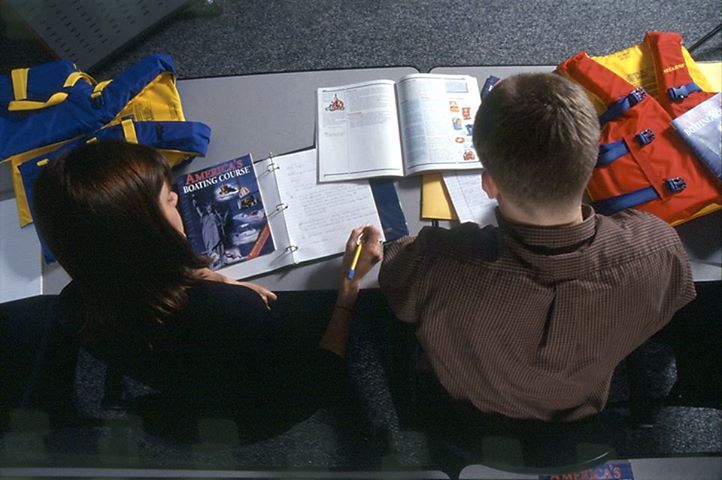
Unfortunately, our boating season has come to an end. But that doesn’t mean we have to stop thinking about boating. The off-season is a great time to take an online boating course. Brushing up on navigational skills, emergency procedures, and safety regulations is important to your safety and everyone on board.

The advantages of online boating courses is that you can complete them on your own time and absorb the information at your own pace. Remember, boating is as much about knowledge as it is about experience. Learning the fundamental knowledge to safely navigate your boat on the water is what an online boating course is intended to do.

We encourage you to complete an online boating course this winter. And be ready to launch with confidence in the spring.

10 Boat Buying Tips


Are you thinking about getting on the water? Do you want to start enjoying the boating lifestyle? Deciding to buy a boat is a big decision that requires some research beforehand.

Here are ten tips to follow while shopping for your boat from our friends at Discover Boating Canada:

Plan ahead: There are a lot of choices. Allow enough time to explore many different types of boats, and several different brands within each category…This is a big investment that will change your life.

Your goal: to find the right boat for you and your family…Begin by narrowing down your choices. Ask yourself the following questions: What do I want to do with the boat? Where do I want to go boating? Who is going with me, and how many people should the boat carry? Will we be going offshore? Trailering? Overnighting? Entertaining? Fishing? Waterskiing? How much am I willing to spend on boating? The answers to these questions will help you narrow down your choices.

Choose the right boat. Narrow your choices to a short list of boat categories (listed below) and make short lists of features that you require, features that you would like, and features that you want to stay away from.

Choose the right dealer. Once you have narrowed your category choices down, then the real fun begins. It's time to go shopping. Remember, you are interviewing your dealer as well as searching for the perfect boat. You want to find the right boat-brand-dealer combination. Ask similar questions to each dealer to compare apples to apples. You may not know the exact boat that you want yet, but you know what kind of experience and service that you want to have, so don't be afraid to ask the hard questions.

Consider warranties. Investigate the warranties for every boat you are considering. Warranties are valuable, and should be an influencer in your decision. Some warranties are transferable, which may become a selling point if you decide to sell your boat. Find out what the warranty includes (engine, hull, components, accessories, service, etc.) and find out about the service that you will receive if something fails. A good way to do this is to ask for references. If you are considering buying a pre-owned boat, be sure to get a marine survey - hire this person yourself to ensure that the survey is done with your interests in mind. It will cost you around $12 per foot, but it is money well spent. Visit www.discoverboating.com/ca for a list of surveyors.

Keep a log. At the boat show and as you visit local dealerships, document everything: Take pictures of the dashboard, the galley, the head. Take notes, or record your reactions on a recording device. Involve your family with the decision and listen to their likes and dislikes about each boat. No two boats are exactly the same - but there exists a perfect boat for you and yours. Use your short list of features and brands to quantify your observations… Make a chart, and use it to rank your top choices.

When are you ready? Reminder: There is no correct amount of time that it should take to shop for a boat. For some, one afternoon is all that they need. It takes others several years. The right time for you to buy a boat is when you are ready. Boat shows often offer "show specials" to entice you to purchase at the show. Ask the dealer if he/she would honor that price in a few weeks after doing some more shopping… Chances are the answer will be yes.

The Test Drive. Did you realize that you can test drive a boat? The way a boat handles, and the way it feels on the water is a very important consideration. Bring the family along for your test drives, and try to test the boat in the types of conditions where you will be using it.

The cost of ownership. For most, the cost of owning a boat is nothing compared to the benefits derived from owning and using your own boat. Nonetheless, be sure you understand that the cost of owning a boat includes more than just the fiberglass. Things like storage, fuel, insurance, winterization, repairs and maintenance can cost anywhere from $50-150/foot annually, depending on how handy you are, how often you use your boat and where you live.

Learning to use your new boat. Boating is not difficult, but driving a boat, like anything else, is a skill. If you have not already, sign up for a boaters education course, where you can learn the rules of the road. For on-the-water training, some dealers provide captains to train you on how to use your boats. Others leave it up to you to learn. Most marinas and dealerships have a network of captains or experienced boaters that you can hire to show you the ropes on your own boat. Most likely the only parts that will require practice will be docking, launching and retrieving your boat. The best tip here is just to take it slow and practice.

Tuesday, October 29, 2013

7 Tips to Protect Your Boat This Winter


Are you starting to prepare your boat for its winter nap? Always check your boat owner’s manual for specific winterizing and boat maintenance instructions. Remember that water, ice, and mold can cause expensive damage if you do not take the necessary precautions before putting your boat away.

Prevent expensive repairs with these tips:
  1. Take care of normal maintenance and repairs during the Fall. Marinas get very busy during the Spring and waiting until then can result in a longer waiting period to get out on the water.
  2. Examine your boat carefully for cracks or other signs of damage. Check the hull, scrape and clean off barnacles, and then use a high-powered pressure washer on the hull.
  3. Check your boat’s engine for loose wires or connections. Change the oil and oil filter, and fill the engine with fuel and stabilizer. Idle the engine to distribute the stabilizer throughout the power system.
  4. Check the interior for any water that can lead to mold damage.
  5. Store marine electronics that can be removed indoors. 
  6. If you cover a boat in shrink wrap, make sure the covering includes vents to allow moisture to escape (or a doorway so you can inspect the boat periodically). 
  7. If you use a tarp, tent it properly to help prevent moisture from accumulating in sagging areas. Check the boat periodically, especially after winter storms, to prevent minor problems from growing into major repairs.
If you need us to take care of your boat's winterization, please contact us to schedule your appointment today!


7 Tips to Protect Your Boat This Winter


Are you starting to prepare your boat for its winter nap? Always check your boat owner’s manual for specific winterizing and boat maintenance instructions. Remember that water, ice, and mold can cause expensive damage if you do not take the necessary precautions before putting your boat away.

Prevent expensive repairs with these tips:
  1. Take care of normal maintenance and repairs during the Fall. Marinas get very busy during the Spring and waiting until then can result in a longer waiting period to get out on the water.
  2. Examine your boat carefully for cracks or other signs of damage. Check the hull, scrape and clean off barnacles, and then use a high-powered pressure washer on the hull.
  3. Check your boat’s engine for loose wires or connections. Change the oil and oil filter, and fill the engine with fuel and stabilizer. Idle the engine to distribute the stabilizer throughout the power system.
  4. Check the interior for any water that can lead to mold damage.
  5. Store marine electronics that can be removed indoors. 
  6. If you cover a boat in shrink wrap, make sure the covering includes vents to allow moisture to escape (or a doorway so you can inspect the boat periodically). 
  7. If you use a tarp, tent it properly to help prevent moisture from accumulating in sagging areas. Check the boat periodically, especially after winter storms, to prevent minor problems from growing into major repairs.
If you need us to take care of your boat's winterization, please contact us to schedule your appointment today!


Thursday, September 19, 2013

Top 5 Reasons To Wear A Life Jacket

We recommend boaters wear life jackets for a simple reason, wearing it is a minor inconvenience compared to the potential benefits in case an accident occurs. In fact, considering the advances that have been made in recent times, the inconvenience of life jackets is no longer as persuasive as it might have been.

Here are the top 5 reasons to wear a life jacket while out boating:

  1. Having a life jacket on is not going to ensure your survival while caught in the waters, but it raises your chances of survival so much that it is foolish not to. In fact, nine in ten victims of drowning might have survived with the help of a life jacket.
  2. You might be confident in your swimming skills, but boating accidents are not famous for giving their victims a chance to use those skills. For starters, being able to swim assumes that you are conscious enough to do so, which is not guaranteed if you are thrown out into the waters.
  3. Even the best swimmers possess limited stamina that can be used to remain afloat. In contrast, life jackets reduce the strain on the wearers while out in the waters, thus securing them more time for help to arrive.
  4. Boating safety is important for even experienced boaters because unexpected occurrences can still cause serious problems. Furthermore, even if you are experienced with boating, other boaters might not be, meaning that it is important to set a good example.
  5. One of the reasons that people dislike wearing life jackets is because old and outdated models are uncomfortable. The solution to this problem is to use newer models, which have been designed to be lightweight and fit better.

Why do you wear a life jacket?

Tuesday, September 10, 2013

How To Beach Your Boat And Leave Again

Monterey Boats 288S SuperSport
Beaching your boat can make for a convenient alternative to anchoring - as well as another amazing adventure on-the-water - but it also comes with its own potential problems. Experience is the best teacher if you are interested in learning how to beach your boat, but there are also some simple tips that can help you cut your chances of encountering difficulties in the process.

Know Your Boat

Before setting off to find your favorite spot to beach your boat, know your boat. Make sure you know your boat's draft (the vertical distance your boat penetrates the water). This will help you from running aground when you're not planning to. Also have your nautical chart of the water you’re boating in handy, as nautical charts show you the estimated depth of water.

When you're cruising the shoreline and spotted the beach that looks like fun, check your nautical chart for the water depth to help plan your way.

Beaching the Boat

Maintaining speed and roaring up the beach might be exciting, but it’s also not one of the smarter methods for beaching a boat (unless you're starring in the next James Bond movie - of course). Speed can cause some serious damage being inflicted on your boat, which could make for an unpleasant experience.

Instead, you should slow down as you approach the beach, while someone stands on the bow to watch for obstacles on the beach. If you have a depth meter onboard, keep a close eye on it. If you have an outboard engine, you may also find trimming up your engines will help you in shallower water.

Once your boat has settled in, use a pair of anchors to secure it. One anchor should lead into the water, while the other should be buried in the beach.

Understanding the Right Places to Beach

Not all places are good for beaching a boat. Too far in and the boat ends up getting stuck on the beach. In contrast, too low and there is a chance that the boat will end up floating in the water. Small boats can be beached further in, but bigger boats should be beached further from shore (check your depth and charts for help deciding). You also need to make sure that the material of the beach is suitable for beaching, because some materials such as mud can make it impossible for your boat to leave.

Understanding the Right Times to Beach

Be sure to account for the influence of the tides. If you come in on high tide and beach the boat too high, it could get stuck once the tides retreat. You should also bear in mind that beaching a boat is a short-term measure, meaning that if you intend to remain overnight, you should anchor your boat instead.

Leaving the Beach

Assuming that you have chosen the right place and right time to beach your boat, you should have no problems removing the anchors and leaving much the same way that you came in. If you trimmed your engines, make sure to lower them once you reach a safe depth.

Where’s your favorite place to beach your boat?

Friday, August 9, 2013

What to Look For When Buying A Boat For Wakeboarding

You have decided to take the plunge and buy a wakeboarding boat, but you're not entirely sure what you should be looking when you're shopping for that particular type of vessel.  All boats are not created equal, and the intended recreational purpose of the vessel should go a long way in determining which boat you eventually purchase.  As an example, a slow moving boat might be the perfect craft for casting your line in search of fish, but it will hardly serve the purposes of dragging your friends and loved ones across the waves at crazy fast speeds.

It’s All in the Name

In an ideal situation, a wakeboard boat is going to generate some pretty serious wake.  With that in mind, there are several design characteristics that you should be looking for to help ensure that your passengers achieve some very impressive air between them and the water.


  • Engine placement: Known as V-drive engines, a rear mounted engine will generate much larger wakes than a direct-drive, or mid-boat placement of the engine, and will help navigation through choppy conditions.
  • Tower Racks: Whereas the engine is what gets things in motion, the tower rack is the part of the boat that keeps things tethered.  The tower rack will be fully capable of holding all your gear, and keeping your riders attached to the back of the boat.


Monterey Boats is the Name to Remember

The team at Monterey Boats has been perfecting the art of boat making for a quarter of a century.  As such, if your new hobby is wakeboarding then you need to start your search with this Central Florida, family-owned, and operated business.  Each vessel represents the combined professionalism and commitment to unparalleled customer service.  When you’re looking for your first wakeboarding boat, you should remember the quality products from Monterey Boats.